Crooked-stem Aster for Fall Pollinator Gardens
Tracy Teuscher
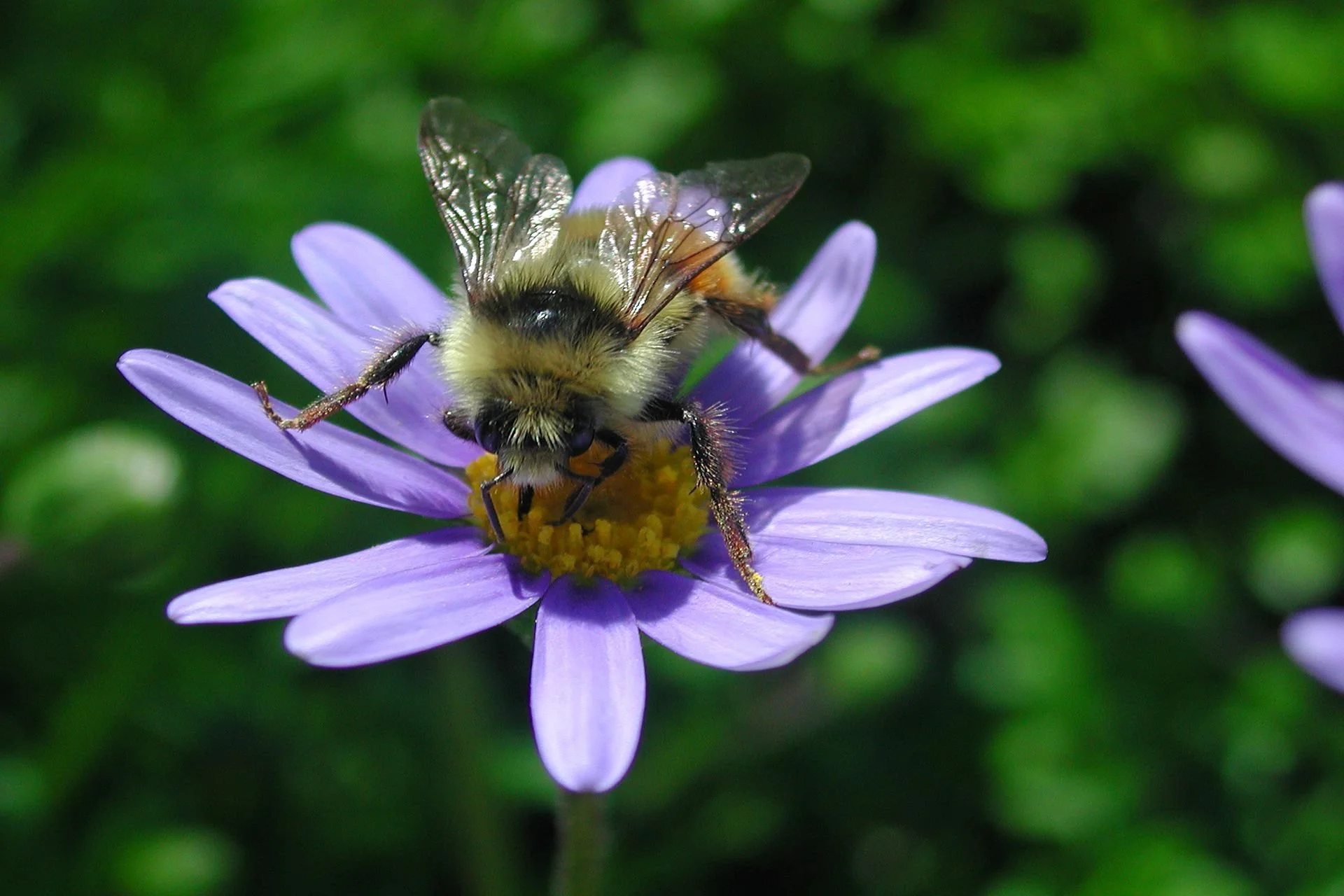
In the fall, native bees are looking for the last pollen and nectar sources. One aster that is still growing strong is the crooked-stem aster (Symphyotrichum prenanthoides).
This lovely little aster is a powerhouse for beneficial pollinators, including many native bee species, butterflies, and moths.
Plus, its seeds are an occasional food source for the wild turkey and ruffed grouse.
Aster Attributes
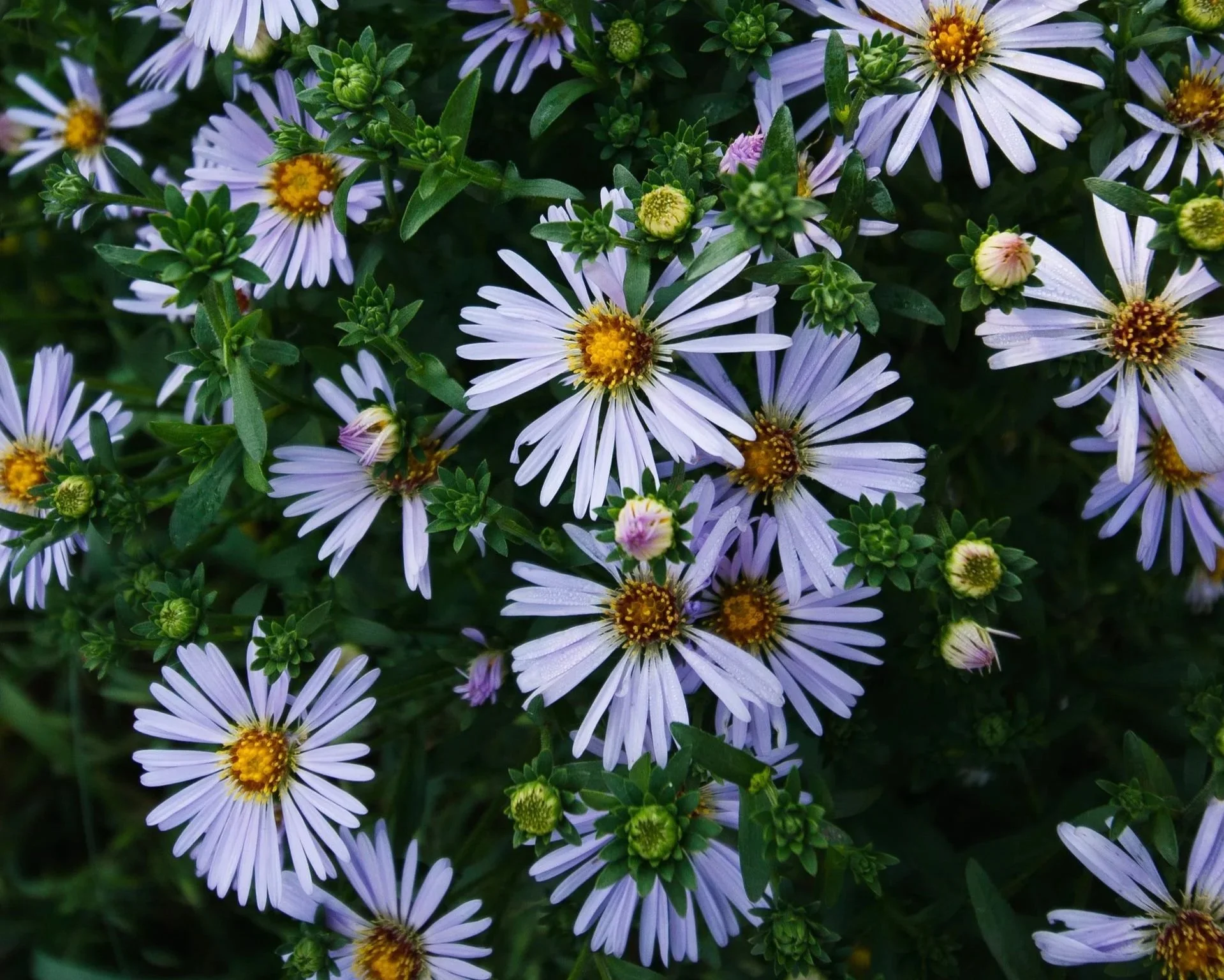
Aside from the ray flowers, which can vary in color and hue from pale to medium lavender, violet, or blue, the crooked-stem aster has unusual oblanceolate (inversely lance-shaped) leaves with slightly winged petioles (the slender stalk that connects the leaf blade to the stem).
The spade-shaped leaves have coarse-toothed margins. This feature is what the species was named for.
Inflorescence
Crooked-stem aster is also unique in its inflorescence. Inflorescence is the complex flower cluster of a plant, including stems, stalks, bracts, and the specific floral pattern.
The inflorescence of a crooked-stem aster is ordered, bountiful, and airy, with each of the attractive composite flowers having its place in clear relation to the others in an alternating zig-zag orientation.
Where Aster Grows
In the wild, you can find this aster growing along the moist edges of streams and wetlands, in woods and thickets, and along roadsides. It grows most prolifically in more open areas, and can tolerate part shade.
Where to Find Aster
Look for crooked-stem aster at your favorite nursery, and plant it where it will be happy and have plenty of energy to produce food for Ohio bees. This plant prefers average to medium-wet conditions with neutral to slightly acidic soil. Wherever you plant it, the bees will thank you.
Find a List of Ohio Nurseries on our Free Guides Page
Our Contributor
Many thanks to Christopher Chaney, botanist and biologist, for contributing to this blog. Christoper Chaney works as a biologist for Summit Metro Parks, promoting the Wild Back Yards program and native species rescue and restoration. He is passionate about preserving Ohio’s abundant greenspace, diverse ecosystems, and agricultural legacy, and we are grateful for his contributions to our mission.
Resources
https://floranorthamerica.org/Symphyotrichum_prenanthoides
https://plants.ces.ncsu.edu/plants/symphyotrichum-prenanthoides/
https://kb.jniplants.com/crooked-stem-aster-symphyotrichum-prenanthoides
https://www.wildflower.org/plants/result.php?id_plant=SYPR6
https://gobotany.nativeplanttrust.org/species/symphyotrichum/prenanthoides/
https://www.prairiemoon.com/symphyotrichum-prenanthoides-crooked-stemmed-aster